
Bete Mariam – Lalibela’s Most Beloved Church
Bete Mariam Church (Lalibela’s most beloved church) is neither the largest church in Lalibela nor the most architecturally beautiful church. However, it is the most beloved church of Lalibela by both St. Lalibela and Christian believers. St. Lalibela is said to have attended services daily in this church.
Facts About this church
- It is the first church he built.
- It is the most beloved church by St. Lalibela
- He carved a personal family prayer box on the wall of the western courtyard.
- When Popes, bishops, and monks come, they serve in this church.
- During Christmas and Lalibela’s birthday, the biggest Lalibela celebration takes place at this church.
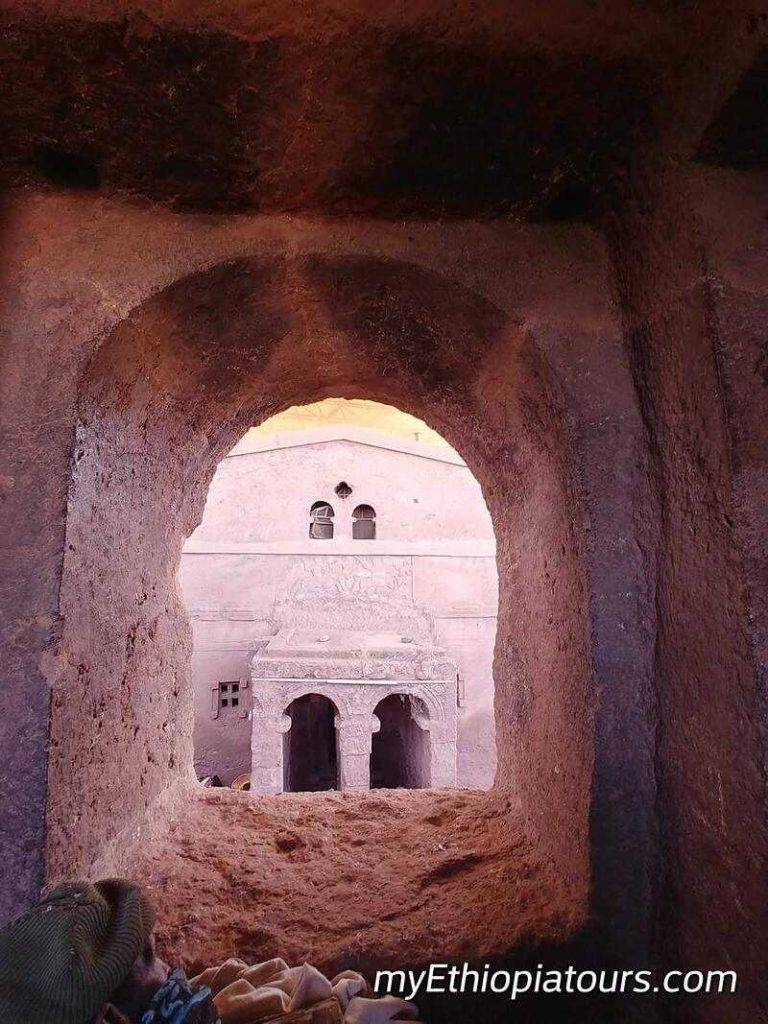
History of Bete Mariam Church
King Lalibela built Bete Mariam Church during the 12th–13th century as part of the famous rock-hewn churches of Lalibela, now recognized as a UNESCO World Heritage Site. Lalibela was created as a “New Jerusalem” after pilgrimage to Jerusalem became difficult for Ethiopian Christians. Today, the Lalibela churches remain among the holiest places in the Ethiopian Orthodox Church.
Bete Mariam is dedicated to the Virgin Mary and is considered spiritually Important by Ethiopian Orthodox believers. Many pilgrims come here seeking blessings, healing, and spiritual guidance. Important religious ceremonies and celebrations are still held here throughout the year.
Architecture of Bete Mariam
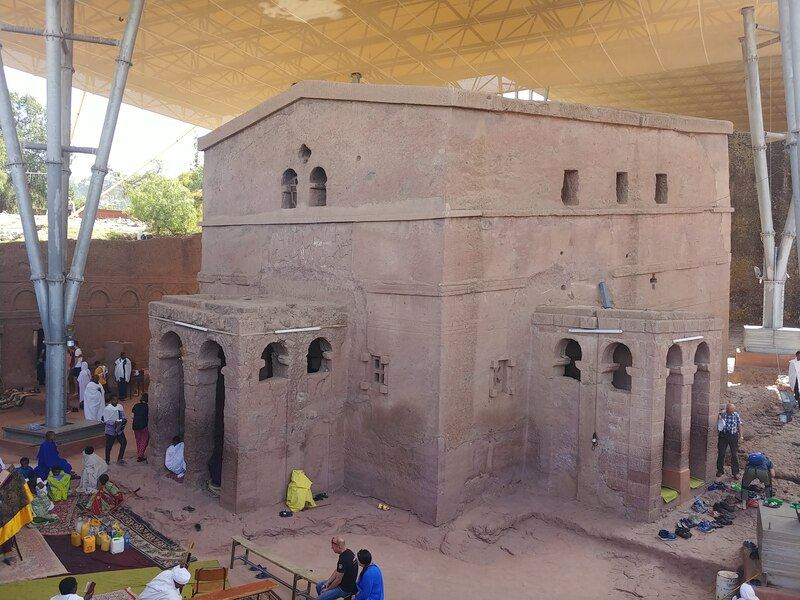
To go to Bete Mariam, the best and easiest way is through the Bete Medhane Alem enclosure, passing through a canal. When you get to the courtyard, you will notice a water well dug into the volcanic rock. It is used for the baptism of holy water.
On the east side of the wall, there are symbolic marks carved into the rock. When you see them, you realize how the culture of Ethiopian Orthodox Christianity uses symbolic representation. The unique upper hole represents the Father. The three holes below symbolize the crucifixion of Jesus, with Jesus in the middle and the other two men beside Him. At the bottom, there is another hole representing Hell.
The priests usually point to the hole at the bottom and to the left side of Jesus and say, “That is the first visitor of Hell.” I just hope we are not going to travel there. 🙂
The architecture of Bete Mariam Church beautifully combines spiritual symbolism, ancient rock-hewn engineering, and the traditions of Ethiopian Christianity. The surrounding trenches, courtyards, tunnels, and sacred passages connect the church with nearby churches such as Bete Medhane Alem, Bete Meskel, and Bete Golgotha, forming part of the remarkable rock-hewn churches of Lalibela.
Interior of the Church
The interior of the church is decorated with paintings, and it also has a gallery at the top. In the center, there is a tall pillar covered with a white cloth. In low light, it appears to be a pillar of light. The priests say that inside are the words of God given to Lalibela. It is written in three languages: Geez, Greek, and Arabic. The writing tells about the beginning and the end of the world.
Inside the church, visitors often feel a deep sense of peace, mystery, and spirituality. The smell of incense, chants, candlelight, and prayers create an unforgettable atmosphere.
Visiting Bete Mariam Church
The best time to visit Bete Mariam Church in Lalibela is during religious festivals or early in the morning when the atmosphere is peaceful and the light is beautiful for photography.
Photography Tips
- Early morning provides the best natural lighting.
- Avoid flash photography inside the church.
- Always respect worshippers and ask permission before taking photos of priests or pilgrims.
Dress Code
- Wear modest clothing that covers the shoulders and knees. Women need to cover their heads.
- Visitors must remove their shoes before entering the church.
- White traditional clothing is commonly worn by pilgrims. Not required, but it is amazing if you have.
Church Experience
Visitors to Bete Mariam Church often describe the experience as spiritual, peaceful, and unforgettable. The ancient rock-hewn walls, prayers, and sacred atmosphere make it one of the most remarkable churches in Ethiopia.