
Addis Ababa Travel Guide and Tips
Sitting at the foot of Entoto Mountain, Addis Ababa was established in 1886 by Emperor Menelik II. Having served as the capital of Ethiopia for more than 130 years, the city offers a magnificent diversity and a vibrant mix of cultural history and modernity. It is home to remarkable remnants of Ethiopia’s imperial, communist, and archaeological past.
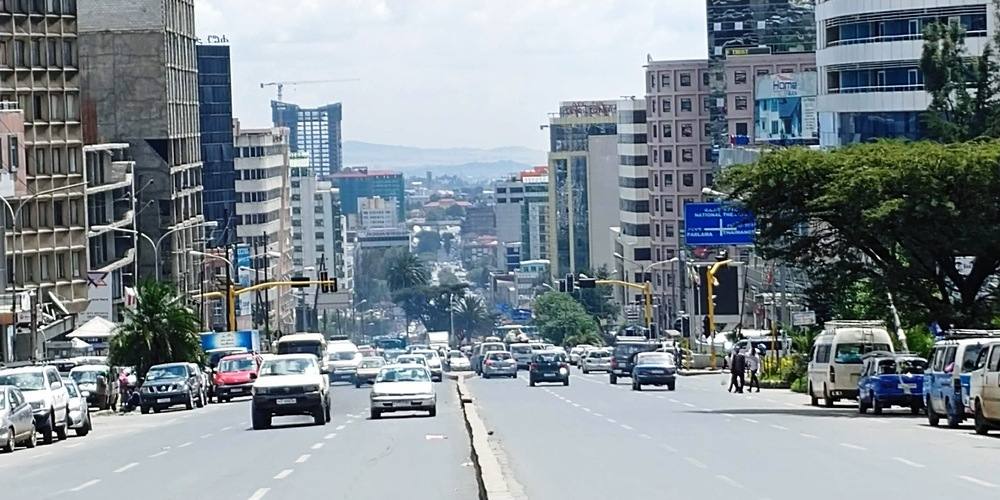
Addis Ababa is brightened by its glorious history, but it is by no means stuck in the past. Behind its rich and complex historical tapestry, everyday life unfolds with fascinating variety.
When’s the Best Time to Go to Addis Ababa?
There is no bad time to visit Addis Ababa. The weather is comfortable year-round, and the sun shines almost every day. Temperatures are moderate, typically ranging from 48°F to 75°F, and rarely falling below 42°F or rising above 80°F. However, from mid-June to September, the city experiences its rainy season.
If possible, visit on September 27 or January 19 to witness the colorful religious celebrations of Meskel and Timket. During the Lent season, nightlife becomes quieter for the 55 days before Ethiopian Easter and the 40 days before Ethiopian Christmas.
How to Get Around in Addis Ababa
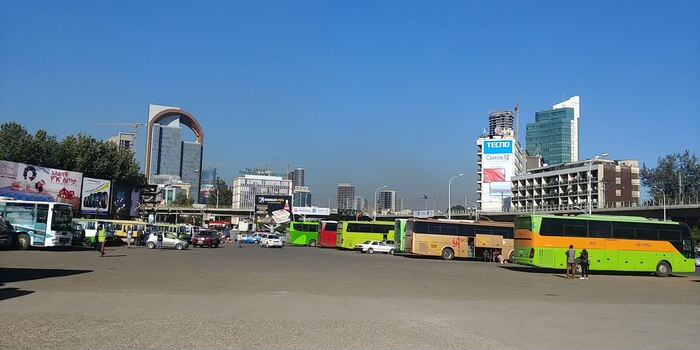
Choosing the best mode of transport in Addis Ababa can be a bit confusing for first-time visitors. Hiring a private car or taxi is often the easiest option, but there are several ways to explore the city.
By Taxis
There are two types of taxis in Addis Ababa: blue and yellow taxis. You can easily find a taxi almost anywhere in the city, and they are a comfortable way to get around.
The blue taxis are older and mostly used by locals. The yellow taxis are newer, in better condition, and commonly found around hotels, airports, and the city center. One important tip is to ask the driver about the fare before starting your journey and negotiate the price if necessary.
By Ride-Hailing Services
Ride-hailing services, similar to Uber, are a cheap and dependable mode of transport in Addis Ababa. You can book them through an app or by phone. Although there are several service providers, they are not yet as popular as in other countries, so availability can sometimes be limited. They are generally safer and more comfortable, and your hotel can help arrange one for you.

By Minibus Shared Transport
Locals often call them “taxis,” but these are minibuses that carry around 12 passengers. It is a fun and affordable way to experience local life in Addis Ababa. A trip usually costs between 3 and 6 Birr (approximately 0.1–0.2 USD), depending on the distance. There are also public city buses available.

By Light Rail Train
Widely known by locals as Babur, Addis Ababa’s light rail system consists of two lines running north-south and east-west across the city.
Price: A single trip costs around 4 Birr (0.1 USD).
Service Hours: Daily from 6:00 AM to 9:00 PM.
Can’t-Miss Things to Do in Addis Ababa
The National Museum
National Museum of Ethiopia
If you want to discover the origins of humankind and some of the world’s oldest human ancestors, the National Museum of Ethiopia is a must-visit attraction in the heart of Addis Ababa.
One of the museum’s most famous exhibits is the fossilized remains of Lucy, estimated to be 3.2 million years old. The museum also houses an impressive collection of Ethiopian art, ethnographic displays, archaeological discoveries, historical artifacts, paintings, sculptures, crowns, and colorful portraits of Ethiopian leaders.
Merkato Market
Merkato
Prepare yourself for an adventure in what is believed to be Africa’s largest open-air market. Merkato is chaotic, colorful, crowded, and absolutely unforgettable.
Experiencing Merkato is one of the top things to do in Addis Ababa. With over 7,000 shops and stalls spread across Addis Ketema district, visitors can easily get lost in the maze of street vendors, bustling crowds, and busy roads. Booking a guided tour or hiring a local guide is highly recommended to help you navigate the market.
You can find almost everything here — food, spices, clothing, electronics, handicrafts, antiques, souvenirs, and more. The spice, food, and recycling sections are particularly vibrant and photogenic.
The Red Terror Martyrs’ Memorial Museum
Red Terror Martyrs’ Memorial Museum
The Red Terror Museum is a memorial site documenting the political violence and genocide that followed the overthrow of Emperor Haile Selassie in 1974.
The museum displays materials related to the killings, torture, and imprisonment of thousands of Ethiopians during the Derg regime. Located near Meskel Square in central Addis Ababa, the museum preserves one of the darkest periods in Ethiopian history with the message: “It should never happen again.”
Between 1976 and 1977, an estimated 30,000 to 500,000 people died during the Red Terror period. After the fall of the Derg government in 1991, prosecutions were launched against former officials involved in crimes against humanity.
Holy Trinity Cathedral
Holy Trinity Cathedral
The Holy Trinity Cathedral, known in Amharic as Kidist Selassie, is the highest-ranking Ethiopian Orthodox cathedral in Addis Ababa. It houses the tomb of Emperor Haile Selassie, the last Emperor of Ethiopia.
Located near the Parliament, the Prime Minister’s Office, and the former imperial palace, the cathedral is admired for its Gothic-style architecture, stained-glass windows, and beautiful religious paintings.
The cathedral is also the final resting place of Emperor Haile Selassie and Empress Menen Asfaw. The church courtyard contains the graves of patriots, ministers, generals, religious leaders, and other notable Ethiopian figures.
Unity Park
Unity Park
The Grand National Palace, once the residence of Emperor Menelik II, remained closed to the public for generations. Today, Unity Park allows visitors to explore this historic imperial compound.
Built in 1878, the palace served as the seat of government and residence for multiple Ethiopian leaders, including emperors, presidents, and prime ministers. The 40-hectare complex includes historic buildings, botanical gardens, indigenous plants, museums, and a zoo famous for Ethiopia’s rare black-maned lions.
Entoto Mountain
Entoto Mountain
There is no better way to see Addis Ababa from a different perspective than from Entoto Mountain. Located just outside the city center, Entoto offers stunning panoramic views of the capital and its surrounding greenery.
The newly developed Entoto Natural Park is popular for walking, hiking, horseback riding, restaurants, galleries, camping, and outdoor activities. At the summit, visitors can explore the former capital area, including the Museum of St. Mary Church, Emperor Menelik’s Palace, and the historic Church of St. Raguel.
Ethnological Museum
Ethnological Museum
Located inside the former palace of Emperor Haile Selassie, the Ethnological Museum is considered one of Ethiopia’s best museums. It showcases Ethiopian culture, traditional lifestyles, art, and personal belongings of Emperor Haile Selassie.
Best Day Trips from Addis Ababa
Jemma Valley and Debre Libanos Monastery
Debre Libanos Monastery
One of Ethiopia’s most iconic landscapes can be experienced on a day trip to Jemma Valley and Debre Libanos Monastery. Visitors enjoy breathtaking panoramic views, dramatic gorges, rural villages, and cultural encounters.
Located about 100 km north of Addis Ababa, the area is famous for its impressive scenery and one of Ethiopia’s largest monasteries.
Adadi Maryam Rock-Hewn Church
Adadi Maryam
Have you heard about Ethiopia’s rock-hewn churches? These churches are carved directly from solid rock. While Lalibela is the most famous example, Adadi Maryam is another fascinating rock-hewn church located about 130 km southwest of Addis Ababa and believed to date back to the 13th century.
Tiya Stelae and Melka Kunture
Tiya
Melka Kunture
The Tiya Stelae are a UNESCO World Heritage Site featuring mysterious ancient stone monuments believed to mark burial grounds from centuries ago.
Nearby, the Melka Kunture Open-Air Museum provides insight into Ethiopia’s Stone Age history along the Awash River.
Debre Zeit Crater Lakes
Bishoftu
Better known as Debre Zeit, Bishoftu is famous for its stunning crater lakes and relaxing resort atmosphere. It is a perfect getaway from Addis Ababa for visitors seeking nature, relaxation, boating, kayaking, spas, and lakeside resorts.
The area’s seven crater lakes provide some of the most beautiful natural scenery in Ethiopia.
Wenchi Crater Lake
Wenchi Crater Lake
Escape to the majestic Wenchi Crater Lake for horseback riding, hiking, and breathtaking scenery. Formed by volcanic activity, the lake sits at an elevation of about 3,000 meters and offers spectacular views of forests, villages, and mountain landscapes.
Depending on your fitness level, you can explore the area by hiking, horseback riding, or a combination of both. Many travelers choose to spend an overnight stay camping or at nearby lodges.
Where to Stay in Addis Ababa
Piazza Area
If you are looking for budget-friendly accommodation and vibrant local life, the Piazza area is a great choice. It offers street pubs, local restaurants, and easy access to many attractions in Addis Ababa. However, hotel choices here are limited.
Bole Area
Bole
Bole is one of the best areas for first-time visitors and travelers. It offers proximity to the airport, shopping malls, restaurants, nightlife, spas, and modern hotels. It is also one of the nicest neighborhoods for walking around the city.
Addis Ababa City Tour
A guided Addis Ababa city tour is one of the best ways to explore the capital’s history, culture, museums, markets, food, and landmarks with the help of a knowledgeable local guide.